Retired Greyhounds: Adopting an Ex-Racer
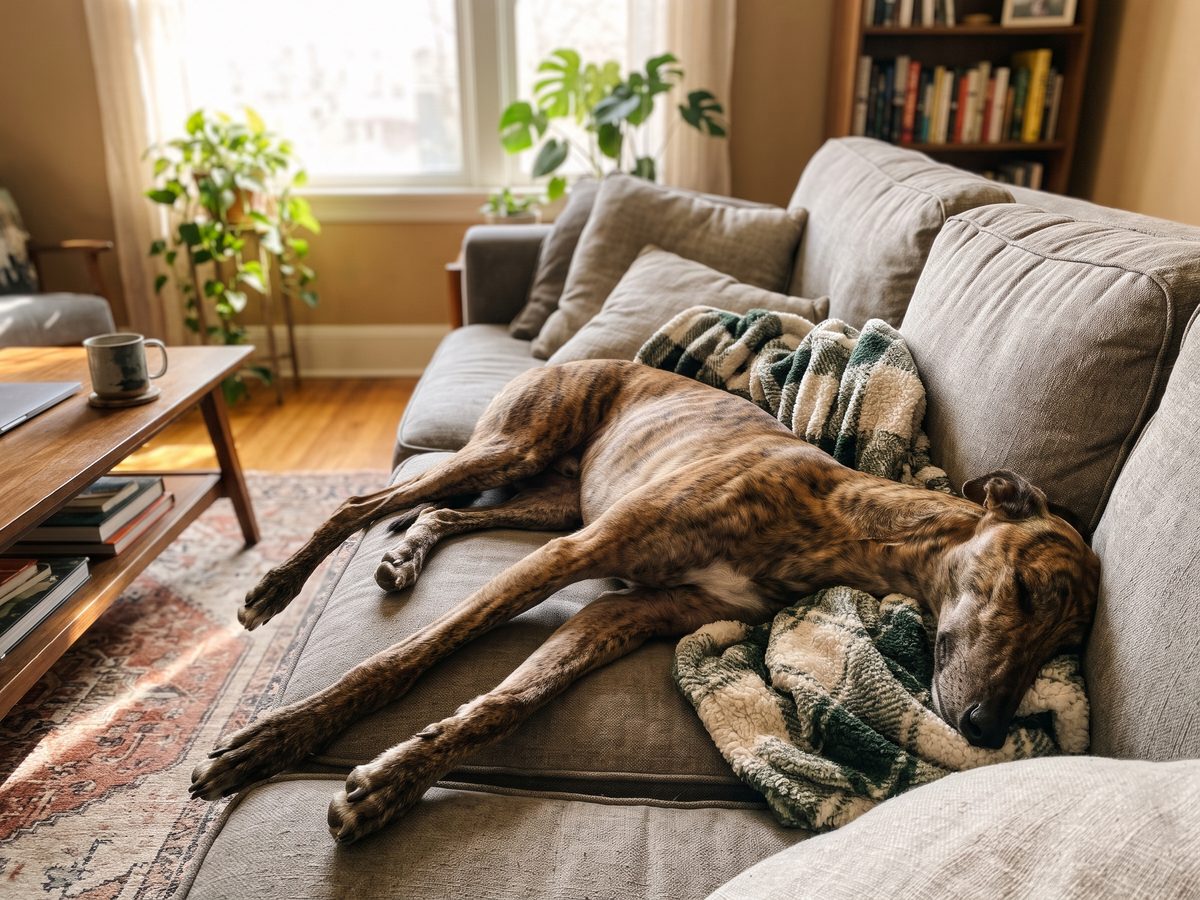
Life After Racing: Who a Greyhound Suits
Many retired Greyhounds are quiet, polite and affectionate, and happy in apartments as well as houses. They suit people who want a calm, gentle dog and can offer a soft bed and company.
Adoption groups assess each dog, including whether it can live with cats or small dogs. Be open with them about your home, other pets and children, so they can match you with the right dog.
Built for a Sprint, Not a Marathon
Greyhounds are sprinters, not endurance dogs. Two walks a day and the occasional safe, fenced run suit most. Some ex-racers have never run off-leash outside a track, so introduce free running slowly in secure places, and keep your dog leashed near roads, livestock and wildlife.
Thin Skin, Chase Drive and Settling In
- Thin skin and cold: little body fat and a fine coat mean a coat for cold walks and a soft, padded bed. Check for nicks after walks.
- Chase drive: many Greyhounds will chase cats, rabbits and small dogs. Rules on muzzling Greyhounds in public differ by country and state, and some adoption groups recommend a muzzle at first; ask yours and check local rules.
- New to home life: stairs, glass doors, shiny floors and being alone may all be new. Go slowly, use rugs on slippery floors, and build up time alone gradually.
- Sleep startle: some ex-racers startle if woken suddenly. Let sleeping Greyhounds lie, and teach children to call the dog rather than touch it while it sleeps.
Gear for a Thin-Skinned Sprinter
Each button opens a search in your own country's Amazon store. As an Amazon Associate we earn from qualifying purchases.
A thick, padded bed protects bony elbows and hips. A sighthound martingale collar won't slip over that narrow head. A warm coat helps in winter, a basket muzzle is useful where advised, and non-slip rugs help a dog new to shiny floors.
Vet Care for an Ex-Racer
Book a check-up soon after your Greyhound comes home, and choose a vet who knows sighthounds: they have some differences from other breeds that matter for check-ups and anesthetics. Ex-racers often need dental care, so ask about teeth at that first visit, and talk about vaccinations and a parasite plan. In the UK, The Royal Kennel Club lists a DNA test for Greyhound neuropathy as best practice for show-bred Greyhounds.
Worming, flea and tick products and any medicines: see your vet or a pet supply store with trained staff. They can tell you what suits a sighthound.
Frequently Asked Questions
Couch time, cats and coats come up most.
Do retired Greyhounds need a lot of exercise?
Less than most people think. A couple of walks a day and an occasional safe run suit most ex-racers.
Can a Greyhound live with a cat?
Some can, many can't. Adoption groups test dogs for this, so tell them about any cats or small pets at home.
Do Greyhounds have to wear a muzzle?
It depends on where you live and the dog. Rules differ by country and state, and some adoption groups recommend one at first. Ask your group and check local rules.
Are Greyhounds good apartment dogs?
Often, yes. They are quiet and calm indoors. Help them with stairs if they've never used them.
Why does my Greyhound need a coat?
Little body fat and a thin coat mean they feel the cold. A coat keeps them comfortable on cold or wet walks.
Related Reading
- Whippet: the Greyhound's smaller cousin.
- Mixed-breed and rescue dogs: adopting an adult dog.
- First 30 days with a rescue dog: settling in.
Every ex-racer is an individual. If your Greyhound limps, has a cut that won't stop bleeding or seems unwell, call your vet.